
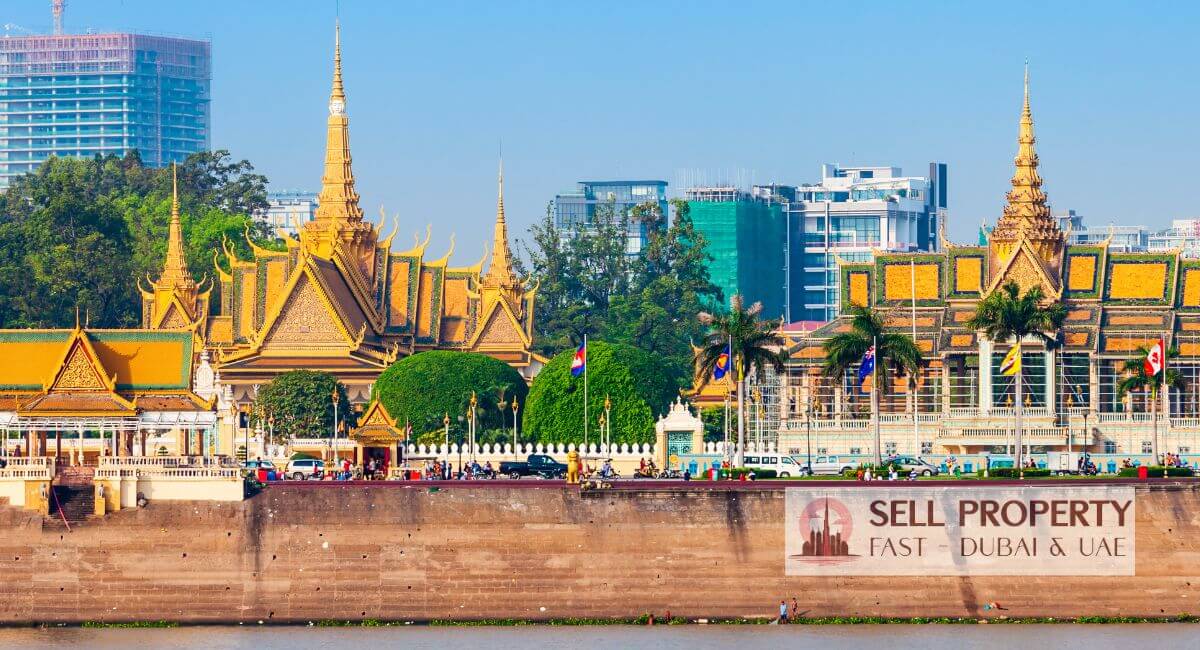
Dubai-based investors are increasingly looking to Cambodia’s condominium market as a high-yield, low-entry-cost complement to their UAE portfolios, and current data strongly supports that strategic pivot. Cambodia offers faster economic growth than many developed markets, significantly lower city-centre prices than Bangkok or Ho Chi Minh City, and condominium yields that often exceed those available in Dubai’s established communities.
This quiet shift from concentrating solely on Dubai to adding Cambodia as a high-growth, high-yield satellite market reflects sophisticated portfolio construction rather than speculative behaviour. Understanding the data behind this trend helps UAE-based investors assess whether Cambodia’s emerging condominium sector aligns with their income objectives and risk tolerance.
What This Analysis Covers
- Why Dubai investors are diversifying into Cambodia’s property market
- Comparative yield analysis between Dubai and Phnom Penh residential property
- Price advantages: Cambodia vs other Southeast Asian capitals
- Economic growth fundamentals supporting Cambodia’s property market
- Foreign ownership rules and freehold condominium structure
- Demand drivers sustaining rental yields in Phnom Penh
- Infrastructure development enhancing long-term growth prospects
- Risk considerations and portfolio diversification strategy
The Macroeconomic Foundation: Cambodia’s Growth Trajectory
Macroeconomic indicators show Cambodia maintaining faster growth than most mature economies, even after recent forecast adjustments reflecting global economic conditions. IMF and multilateral projections place real GDP growth in a roughly 5 to 6 per cent band for 2025, with the Cambodian government targeting approximately 6.3 per cent, whilst World Bank and Asian Development Bank estimates cluster between 5.5 and 5.8 per cent.
This sustained growth is driven by several structural factors. Export manufacturing, particularly garments and electronics, continues expanding as Cambodia integrates deeper into ASEAN supply chains. Tourism recovery post-pandemic has exceeded expectations, with Angkor Wat and coastal destinations attracting millions of international visitors annually. Urbanisation accelerates as rural populations migrate to cities in search of employment and improved living standards.
For property investors, these growth fundamentals translate directly into residential demand. Rising incomes expand the middle-class renter base. Foreign direct investment attracts expatriate workers who require high-quality accommodation. Tourism growth creates short-term rental opportunities. Together, these factors support long-term demand for well-located residential property in Phnom Penh and other key cities.
The Yield Differential: Why Cambodia Outperforms Dubai
Yield and pricing data are what really capture Dubai investors’ attention. The differential between Cambodia and UAE residential returns creates compelling economics for portfolio diversification.
Phnom Penh Condominium Yields
Recent condominium market analyses for Phnom Penh show average rental yields typically in the 6.5 to 8 per cent net range. This represents yields after management fees, service charges, and typical operating expenses have been deducted.
More impressively, some “prime but efficiently sized” units deliver 8.5 per cent and even up to 10 per cent annual returns where professional management and guaranteed-rent schemes are in place. These aren’t outliers in distressed locations but well-positioned properties in central districts with strong tenant demand.
Dubai Yield Comparison
By contrast, regional and comparative studies normally place Dubai’s mainstream residential yields in the mid-single digits, often around 5 to 6 per cent in many established communities. Capital values in Dubai have outpaced rents in several prime locations over recent years, compressing yields despite strong nominal rental levels.
Areas like Dubai Marina, Downtown Dubai, and Palm Jumeirah, whilst offering prestigious addresses and strong rental demand, typically deliver 4.5 to 6 per cent gross yields. After service charges and management fees, net yields often fall to 3.5-5 per cent.
The Yield Advantage Quantified
For an investor already comfortable with Dubai’s risk profile, allocating a portion of capital into a market where yields are 2 to 4 percentage points higher creates meaningful income enhancement. On a US$200,000 investment, the difference between 5 per cent and 8 per cent yields is US$6,000 annually—a 60 per cent income improvement on the same capital deployed.
When combined with forecast price growth, total returns become even more compelling. Well-chosen Phnom Penh condominiums are modelled at 13 to 15 per cent total annual returns (yield plus capital appreciation) compared with Dubai’s typical 7 to 9 per cent total returns in mainstream segments.
Comparative Yield Analysis: Dubai vs Phnom Penh
| Factor | Dubai Mainstream Residential | Phnom Penh Condominiums |
|---|---|---|
| Typical Gross Rental Yield | 5–6% in established communities; 4.5–5.5% in prime locations | 6.5–8% typical; up to 10% in selected prime efficient units |
| Net Yield (After Costs) | Generally 3.5–5% after service charges and management | Generally 5.5–7.5% after management fees and operating expenses |
| Average Price per Sqm | Varies widely; AED 1,500–3,000+ (US$408–817+) per sqft in many areas | US$1,500–2,200 per sqm (US$139–204 per sqft) for central locations |
| Entry Price Range | Studio/1-bed: AED 500,000–1,200,000 (US$136,000–327,000) | Studio/1-bed: US$60,000–120,000 in quality developments |
| Forecast Annual Price Growth | 2–4% in mainstream segments (varies by area and supply) | 6.5–7% forecast through 2027 in selected locations |
| Total Return Potential | 7–9% annually (yield + growth) in typical scenarios | 13–15% annually (yield + growth) for well-chosen properties |
| Market Maturity | Mature market with established infrastructure and liquidity | Emerging market with developing infrastructure and lower liquidity |
| Occupancy Rates | Generally strong in prime areas; varies in oversupplied segments | Approximately 78–85% average; declining vacancy in central areas |
Price Advantages: Cambodia vs Regional Competitors
One of the strongest data points favouring Phnom Penh is the price gap versus more famous regional hubs. This creates “value entry” opportunities for investors accustomed to Dubai’s pricing levels.
Phnom Penh Pricing
2025 market guides for Southeast Asia show prime condominium prices in Phnom Penh’s central districts generally ranging from approximately US$1,500 to US$3,500 per square metre. Many entry-level and mid-market projects fall between roughly US$1,500 and US$2,200 per square metre, providing accessible entry points for UAE-based investors.
Specialist yield studies emphasise this “low cost, high yield” combination. A 2025 overview of Phnom Penh condominium investment notes an average price of around US$2,164 per square metre, delivering average rental yields of approximately 6.8 per cent annually with occupancy around 78 per cent.
Regional Price Comparison
Comparative tables put equivalent prime condominiums in Bangkok and Ho Chi Minh City closer to US$3,500 to US$8,000 per square metre. This implies that Phnom Penh can be 40-60 per cent cheaper on a like-for-like basis in a central location.
High-end districts in Phnom Penh, such as BKK1, reach around US$2,650 to US$3,000 per square metre but still generate strong returns due to embassy presence, NGO offices, and premium expatriate demand. Even at these upper price points, Phnom Penh remains substantially cheaper than comparable districts in Bangkok or Ho Chi Minh City.
What This Means for Dubai Investors
For Dubai investors accustomed to paying much higher per-square-metre prices in prime Gulf locations, these numbers position Cambodia as an “early-stage value” play rather than a fully priced market. The same capital that purchases one apartment in Dubai Marina might acquire two or three quality units in central Phnom Penh, diversifying both location and tenant risk whilst potentially doubling income generation.
Foreign Ownership Structure and Legal Framework
The legal structure and tax environment help explain why capital from Dubai is flowing into Cambodia despite the geographical and cultural distance.
Freehold Condominium Ownership
Foreign ownership rules allow non-Cambodians to own condominiums and other strata-titled units on a freehold basis, usually above the ground floor, up to a substantial share of a building’s total units. This gives investors direct title rather than time-limited leasehold interests common in some neighbouring markets.
Thailand, for comparison, limits foreign freehold ownership to 49 per cent of any development. Vietnam imposes various restrictions. Cambodia’s more liberal approach provides clearer ownership security for international investors.
Transaction Process
Transaction processes for foreigners have become more standardised over the past decade. Developers and agencies are increasingly accustomed to dealing with international buyers, US dollar-denominated contracts, and cross-border payment flows.
This standardisation reduces friction for Dubai-based investors who can conduct transactions remotely with professional support, visiting properties only for final inspections or handover if desired.
Taxation
Cambodia’s tax framework is relatively straightforward for property investors. There’s no capital gains tax on property sales for most individual investors. Rental income is subject to taxation, but rates remain competitive compared with many developed markets. Property transfer and annual property taxes exist, but are modest compared with those in many jurisdictions.
For UAE-based investors accustomed to tax-efficient environments, Cambodia’s structure is familiar and manageable.
Demand Drivers: Why Phnom Penh Yields Are Sustainable
High yields mean little if they can’t be sustained. Rental demand evidence underpins the sustainability of condominium yields in Cambodia.
Declining Vacancy Rates
Phnom Penh condominium market reports for 2025 point to vacancy rates that have gradually declined to around 15 per cent average despite a significant pipeline of completions in 2025 and 2026. This suggests the market is absorbing earlier oversupply as local and foreign demand deepens.
In better-located projects with professional management, vacancy rates often fall below 10 per cent, indicating strong, sustained demand for quality accommodation.
Multiple Tenant Pools
Analysts emphasise the role of multiple tenant pools supporting occupancy in better-located projects:
- Embassy staff from the numerous foreign missions in Phnom Penh
- NGO and multilateral employees from organizations like UN agencies, World Bank, and development institutions
- Multinational corporate teams from companies establishing regional operations
- Growing middle-class domestic renters preferring modern condominiums to traditional housing
- Short-term corporate and tourist rentals in central locations
Many of these groups prefer central, professionally managed condominiums with amenities, which is exactly the stock Dubai-based investors tend to target. This diversified tenant base reduces dependence on any single demand source.
Expat Rental Budgets
International tenants, particularly those on expatriate packages, often have rental budgets of US$1,000 to US$2,500 monthly for quality apartments. On a US$150,000 condominium, a US$1,200 monthly rent generates 9.6 per cent gross yield, well above Dubai equivalents.
Infrastructure Development: The Long-Term Growth Lever
Cambodia’s infrastructure pipeline adds further growth potential beyond current yields. Investment commentaries for 2025 to 2030 highlight major projects enhancing connectivity and supporting urban expansion.
New Phnom Penh International Airport
The new Phnom Penh International Airport, scheduled for completion in phases through the late 2020s, will substantially increase capacity and improve connections to regional and international destinations. Better connectivity typically drives property demand and values in nearby areas.
Transport Infrastructure
Upgraded highways, bridges, and ring roads are expected to enhance internal connectivity within Phnom Penh and improve links to coastal areas and neighbouring countries. This infrastructure reduces travel times and opens new areas for development whilst supporting property values in connected districts.
Urban Development Projects
Mixed-use developments, commercial centres, and residential projects continue transforming Phnom Penh from a developing capital into a modern Southeast Asian city. Each new development raises standards and attracts additional international interest.
Risk Considerations and Portfolio Positioning
Cambodia investment isn’t risk-free, and Dubai-based investors must understand the trade-offs involved in frontier market exposure.
Political and Regulatory Risk
Cambodia’s political environment differs from the UAE’s stability. Policy changes, regulatory shifts, or political developments could affect property markets, foreign ownership rules, or investment returns. This represents a higher risk than Dubai’s well-established governance framework.
Market Liquidity
Cambodia’s property market is substantially less liquid than Dubai’s. Selling properties quickly can be challenging, particularly for units in less desirable locations or buildings with management issues. Investors should consider Cambodia holdings as medium to long-term positions rather than easily liquidated assets.
Currency Considerations
Whilst property transactions occur in US dollars, the Cambodian riel is used for some local expenses. Currency volatility could affect operating costs, though the dollar-based transaction framework limits this exposure compared with markets using local currency exclusively.
Developer and Construction Quality
Building quality varies substantially across Cambodia’s condominium market. Some developments meet international standards whilst others suffer from poor construction, inadequate maintenance, or developer financial difficulties. Thorough due diligence and working with reputable developers becomes critical.
Portfolio Diversification Strategy
For Dubai-based investors, allocating a modest portion of capital into Cambodia can improve overall portfolio yield and geographic diversification without creating excessive concentration risk. A typical allocation might be 10 to 20 per cent of the total property portfolio value, providing meaningful yield enhancement whilst limiting frontier-market exposure.
This approach allows investors to benefit from Cambodia’s high returns whilst maintaining core holdings in Dubai’s more stable, liquid market.
The Dubai Investor Advantage
Dubai-based investors bring specific advantages to Cambodia property investment that residents of other markets may lack.
Emerging Market Comfort
UAE residents are already comfortable with emerging market dynamics, rapid development, and environments where rules evolve alongside markets. This experience translates well to Cambodia, where similar patterns of growth and evolution are occurring.
Dollar-Based Wealth
Many Dubai residents hold wealth in US dollars or easily convertible AED. Cambodia’s dollar-based property market eliminates currency conversion complexity, enabling straightforward capital deployment without exchange-rate concerns.
Geographic Proximity
Dubai to Phnom Penh flight time is approximately 7 hours, making property inspections, handovers, or portfolio reviews logistically manageable. This proximity advantage compared with investors based in Europe or North America facilitates active property management.
International Investment Experience
Dubai attracts globally minded investors already comfortable with cross-border property investment. This sophistication and willingness to invest internationally position UAE residents well for opportunities in Cambodia
Practical Implementation for Dubai Investors
UAE-based investors considering Cambodia property allocation should follow systematic approaches ensuring informed decisions and proper risk management.
Research and Education
Understanding Cambodia’s market fundamentals, legal framework, and specific location characteristics is essential before committing capital. This includes researching Phnom Penh districts, developer reputations, management company quality, and tenant demand patterns.
Professional Advisory Services
Working with established advisory platforms specializing in foreign buyer services helps navigate Cambodia’s market complexities. These firms provide developer vetting, title verification, construction quality assessment, and ongoing management coordination.
Market insights and project data referenced in this analysis were provided by Riel Property, a platform assisting expatriates and international investors in purchasing freehold condominiums across Cambodia.
Start Small, Scale Gradually
Initial Cambodia investments should be modest, allowing investors to understand market dynamics, management requirements, and actual returns before committing substantial capital. A first purchase of US$80,000 to US$150,000 provides meaningful exposure whilst limiting downside risk.
After experiencing one full year of ownership, rent collection, and property management, investors can make informed decisions about scaling up allocations based on actual rather than projected performance.
Focus on Quality and Location
Within Phnom Penh, central districts like BKK1, Chamkar Mon, and Daun Penh offer stronger demand, better tenant quality, and more stable occupancy than peripheral areas. Prioritising these locations, even at slightly higher prices, typically delivers better long-term returns and easier management.
Similarly, focusing on established developers with completion track records reduces construction and delivery risk compared with newer, unproven operators.
Final Thoughts: The Cambodia Complement to Dubai Portfolios
Cambodia’s condominium market represents a compelling high-yield, low-entry-cost complement to Dubai property portfolios for investors comfortable with frontier market risk in exchange for superior income potential. The combination of 6.5 to 8 per cent typical yields, 40 to 60 per cent lower pricing than regional peers, freehold ownership structure, and 5 to 6 per cent annual GDP growth creates attractive economics for sophisticated Dubai-based investors.
This isn’t about replacing Dubai holdings but about thoughtful portfolio diversification, capturing yield premiums unavailable in mature markets. For UAE investors whose priorities include income generation, geographic diversification, and long-term growth exposure, Cambodia’s emerging condominium sector offers exactly these characteristics when approached with proper due diligence and professional guidance.
The quiet shift of capital from Dubai to Cambodia reflects rational portfolio construction by investors recognizing that optimal returns come from combining stable, liquid core holdings with higher-yielding satellite positions in carefully selected emerging markets. Understanding the data behind this trend allows additional UAE investors to assess whether Cambodia deserves a place in their own property portfolios.
Related Articles